The European Union Is Proving Disastrous for Europe’s Democracies. The Time Has Come for Member States to Reclaim Their Sovereignty
The EU’s unelected ruling class has grown into an unaccountable bureaucracy, indifferent to the concerns of its member states, increasingly hostile to American technology platforms, and no longer committed to the principles of free speech.
The European Union’s recent announcement of a 120 million euro fine against Elon Musk’s social media platform ‘X’ for failing to comply with EU rules governing social media has received much attention in the mainstream media. While the fine is notable for its size, it is only the latest in a long line of similar fines levied by the EU against American technology companies over the last several years. In 2025 alone, the EU levied fines amounting to 3.4 billion euros against American technology companies. These include a combined 700 million euro levy against Apple and Meta for violations of the Digital Markets Act (DMA), and a 2.95 billion euro fine against Google for anti trust violations in the ad-tech market. Additional legal cases against Google, Microsoft and Amazon are ongoing and there are indications that the EU will continue to impose large penalties on American technology companies as it aggressively enforces compliance with the Digital Markets Act (DMA) and Digital Services Act (DSA).
The latest salvo by the European Commission centers around X’s alleged misleading use of a blue check mark to identify verified users. When Musk rebranded Twitter as X in 2022, he allowed users to pay for the blue badge without meaningfully verifying who was behind the account, which, the EU argues, allowed the platform to become flooded with spoof accounts, contributing to the rise of disinformation on the site. Per the Commission: “It negatively affects users’s [sic] ability to make free and informed decisions about the authenticity of the accounts and the content they interact with”. As such, the report continues, “there is evidence of motivated malicious actors abusing the ‘verified account’ to deceive users”, placing X in breach of Articles 25, 39, and 40(12) of the DSA. These violations allow for fines of up to 6% of the total worldwide annual turnover of the provider. However, even if X were to pay the fine, there is no guarantee that the company would not face additional fines moving forward, as the European Commission reserves the right to impose additional “periodic payments to compel a platform to comply”.
In a retaliatory move, X banned the European Commission from placing ads on its platform after Nikita Bier, a senior figure at X, accused the Commission of abusing X’s platform by taking advantage of an exploit in its advertising system. This resulted, ironically, in enhanced promotion of the EC’s post advertising its latest fine against the social media platform.
Europe’s Censorship Push
While the drama surrounding the EU’s fine against X may seem like just the latest in a long line of spats between the EU and American tech companies, this recent showdown marks a serious escalation in what has become an ongoing battle over free speech on social media platforms, with serious implications for First Amendment rights here and freedom of expression abroad. This is occurring at a time when EU member states are engaged in a widespread clampdown on speech on online platforms. Large scale arrests for online posts, once unthinkable in the world’s largest democratic union, and almost completely ignored by mainstream media, are now commonplace. Under Section 185 of Germany’s Criminal Code it is now a crime to insult someone online. As a result, Germany is on pace to arrest over 3500 of its citizens for online posts in 2025, more than double the number of arrests for similar offenses in China. Many of these cases involve innocuous posts whose meaning is subject to interpretation by local censors. These types of arrests are sure to grow in the coming years as provisions of the DSA continue to be rolled out across the Continent.
Adding fuel to the fire, critics argue that many of these legal sanctions appear to be directed against conservative voices. One notable instance involves David Bendels, editor in chief for Alternative fur Deutschland (AfD), who received a seven month suspended sentence for “abuse, slander or defamation against persons in political life” after he posted a doctored image of a political rival accompanied by the words “I hate freedom of opinion”. This September, Joachim Paul, another AfD member and front runner for the mayoral race in Ludwigshafen, had his campaign terminated following an investigation by the German Ministry of the Interior, which determined that his praise of a ‘Lord of the Rings’ miniseries using an ‘ok’ sign constituted hate speech. Social media is rife with similar examples of frivolous acts of censorship across the Continent.
The situation in England is even more pronounced, with that country on pace to arrest more than 12,000 of its citizens in 2025 for online posts under the Online Services Act (OSA), making it more hostile to free speech than either Saudi Arabia or Russia. The Starmer administration has demonstrated its willingness to use the OSA to create what increasingly resembles a repressive police state, driven in large part over fear of criticism of its policy of mass migration, its reluctance to combat illegal immigration, and its inability to successfully integrate its large Muslim population, all of which have led to violent protests in recent years. One user was recently threatened with arrest for simply pointing out that there was a deceased cat on her neighbor’s property, while another was jailed for calling a convicted rapist “a pig”. In one well publicized incident, a controversial media personality was interrogated by police for several hours and threatened with jail time following an Instagram comedy show in which she mocked her own epilepsy. When the story was picked up by a prominent stateside political commentator, police threatened her with arrest if she broadcast anything about the interview. Anything deemed as “causing anxiety” is now an arrestable offense, as England pursues its Orwellian goal of creating a frictionless society for its citizens.
The current developments in England, as disturbing as they are, offer an opportunity for the Trump administration to send a clear message to countries that seek to silence their citizens. The administration has already cited concerns over the OSA as part of the reason it placed its 40 billion dollar Technology and Prosperity Deal with England on hold, and for this they should be commended. The Trump administration now has an opportunity to make reform of the OSA a prerequisite for ratification of the deal: taking this step would send a clear message that the U.S. will not reward allies who deny its citizens the most basic rights, or who employ punitive tactics, including threat of reputational damage or the threat of jail time, in an effort to stifle even the most timid dissent. The US State Department’s recent sanctioning of former EU President Thierry Breton and four other individuals came as a welcome development and should be lauded. But additional steps are necessary. The Trump administration must make it clear that the EU will no longer be allowed to issue massive, punitive fines against American technology companies to fund its socialist, dystopian experiment, one which is openly and brazenly contemptuous of the most basic rights of its citizens.
Implications for Free Speech in the United States
If you are of the mind that developments in Europe are irrelevant to the exercise of free speech in the U.S. you would be mistaken. There are clear indications that EU officials, under President van der Leyen, have every intention of rolling out their censorship agenda stateside. The EU recently announced the opening of a new headquarters for the DSA in San Francisco to assist with the rollout of provisions of the Act in the U.S., a clear indication that their current censorship drive is only in its early stages, and recent actions taken by EU officials demonstrate their commitment to weakening provisions of the First Amendment in this country.
Take, for example, the EU’s brazen interference in the most recent US presidential election. In the lead up to the 2024 Presidential contest, Elon Musk offered to interview then candidate Donald Trump on X. In a carefully timed threat, Thierry Breton, EU President at the time, sent a letter to X on Aug 12, 2024, the very same day of the interview, warning the platform to stop the “amplification of harmful content”. In the letter, Breton referred to recent social unrest in the UK as an example of how harmful content can fuel violence and unrest. Linda Yaccarino, then CEO of X, criticized the letter, rightly calling it “an unprecedented attempt to stretch a law intended to apply in Europe to political activities in the US”, adding that “it also patronizes European citizens, suggesting that they are incapable of listening to a conversation and drawing their own conclusions”. The letter was cited by Secretary of State Marco Rubio as a factor in his recent decision to sanction Breton. Signaling from The State Department that the current list of sanctioned individuals is far from exhaustive is welcome news and sends a clear signal that interference in US domestic politics will not be tolerated.
Europe’s Migrant Crisis
What makes the events unfolding in Europe so relevant is that the push for censorship is occurring against the backdrop of a generational social upheaval taking place on the Continent, driven by the EU’s embrace of uncontrolled mass migration, which is being fueled by a constellation of progressive immigration NGOs. Europe now finds itself in the the throes of an unprecedented epidemic of physical and sexual violence, committed largely, though not entirely, by waves of migrants from North Africa and the Indian subcontinent. In the last decade, European cities have witnessed skyrocketing crime and sexual assault. Sweden is now the rape capital of Europe. Many of its cities, once models of progressive stability and safety, are rife with gang violence. Gun fatalities, once uncommon, have tripled from 2012 - 2022, and gang related bombings are now an almost daily occurrence, rising from 149 in 2023 to 317 in 2024. (1)
Germany, a country in which the crime of gang rape was virtually unheard of twenty years ago, recorded 761 incidents of gang rape in 2023, or nearly two cases a day, with 47.5 percent of the suspects foreigners. (2) Similar trends involving sexual violence are occurring across Europe. So called ‘no go zones’ - sections of towns and cities too violent to visit without fear of assault by gangs of migrants - are now commonplace throughout Europe. The recent gang rape in November of an 18 year old Italian woman by five Moroccan immigrants, and the rape of a 60 year old Italian woman this September by a Gambian immigrant are only the latest in a litany of hundreds of similar cases over the last several years. Taken in isolation, these crimes would be shocking enough, but they form part of a larger, consistent pattern playing out across Europe’s democracies.
Europe is confronting the reality that mass migration poses a threat to the social cohesion of its member states which, left unchecked, will ultimately lead to their unravelling. The Christmas markets in Austria and Germany are a thing of the past, as they have become soft targets for Islamist attacks. Christmas and New Year’s celebrations in France have been cancelled this year out of fear of terrorist attacks, and nativity scenes in Italy this December were set alight by a Pakistani migrant. In France, this past New Year’s celebration witnessed what has become an annual tradition in that country - the so called ‘Infidel Car Burning’ ceremony, in which gangs of illegal migrants set cars on fire throughout the country. The deployment of 90,000 gendarmes failed to quell the violence, with over 1000 cars set alight in one night.
Worryingly, European leaders have so far proven unwilling to deport migrants from Muslim majority countries who openly call for jihad against their host countries, who defiantly refuse to assimilate to their host cultures, and who adopt triumphalist religious rhetoric in mosques, proudly boasting of their intent to destroy the West and its institutions. Hundreds of such incidents are well documented on social media. And yet these same government officials would have us believe that the real threat comes from citizens who complain online about the traumatic events they are witnessing in their communities. This dangerous dynamic has led to a situation where Europe’s citizens continue to experience violence at the hands of migrants at a time when they are being systematically stripped of the ability to voice their concerns without fear of reprisal from the state. The result is an explosive cocktail of resentment and anger that will increasingly be directed against newly arrived migrants, further damaging social order. Immigration without assimilation is an invasion, and Europe’s leaders must own up to the reality that social cohesion is a matter of national security. To pretend otherwise is folly.
Events in Hamburg in April 2024 should serve as a wake up call. A group calling itself Muslim Interaktiv, with ties to the banned terror group Hizb-ut-Tahrir, held an 1100 person strong rally where masked participants displayed signs that read ‘The Caliphate is the Solution” and called for the introduction of Sharia law in Germany. While the group was ultimately disbanded, the dangers posed by such gatherings cannot be underestimated: they are merely a terrifying prelude to larger and potentially violent demonstrations in the future.
The cultures of Europe are not melting pots; unlike the United States, Europe’s cities and towns are ill equipped to absorb large numbers of migrants from widely divergent cultures. The EU’s seeming inability to acknowledge this reality, and its attempt to stifle dissent on the topic, risks creating a societal powder keg. Rather than reform and adapt, the European Parliament has decided the best path forward is to clamp down on criticism over its failed multicultural experiment, while doubling down on NGO driven mass migration.
Indeed, recent statements by Chancellor van der Leyen, in which she promises to create more ‘safe passages’ for migrants, should worry all Europeans. Under the current Migration & Solidarity Pact, Europe’s citizens can rest assured that their cities will continue to be flooded with third world migrants, many from countries with well documented rape cultures like Pakistan, a nation where, according to Women's Studies professor Shahla Haeri, rape is "often institutionalized and has the tacit and at times the explicit approval of the state”. (3) Shockingly, the Pakistani government does not consider the sexual violation of girls over 10 years of age to constitute rape (4). Between January and June 2023 Pakistan recorded 2,227 cases of child sexual violence, an average of 12 children per day – or one every two hours, though the actual numbers of assaults is likely much higher (5). The continued influx of migrants from Africa and the Indian subcontinent all but ensures the immiseration of Europe’s citizens, who will continue to be victims of targeted and physical and sexual violence in the coming years.
The NGO Migrant Pipeline
There is much that is good about multiculturalism. Immigrants make our cultures more diverse, they are indispensable for growing the world’s economies, and, in Europe’s case, they provide essential workers to offset the Continent’s declining birth rates. No one will argue that immigrants have much to offer Europe’s democracies. What distinguishes Europe’s current migrant crisis is that it is to a large extent manufactured, driven by the ideological embrace of mass migration and a belief in ‘open borders’, as espoused by the likes of George Soros and the Open Society Foundations (OSF), and fueled by the International Organization for Migration (IOM) and a constellation of hundreds of EU funded immigration NGOs operating in North Africa and Southern Europe.
The nations of Europe face a stark choice: demand complete autonomy from the EU’s current top down driven immigration policies or face cultural ruination. Recent warnings from Trump officials regarding Europe’s ‘civilizational erasure’, widely panned by the mainstream media as posturing and bluster, is prescient. The disaster unfolding in Europe is not a figment of popular imagination nor is it the product of conspiratorial thinking. The time has come to forcibly sideline the open border zealots and mass migration apologists who prioritize virtue signaling above all else, irrespective of the damage that their reckless policies inflict on everyday Europeans. The OSF and its minions must not be allowed to force upon Europe their diseased utopian vision, wherein a nation’s customs and traditions are viewed as empty bourgeois constructs that stand in the way of a greater Marxian agenda. The nations of Europe must forcefully reject immigration policies driven by wealthy ideologues like Soros, who view the dissolution of Europe’s cultural hegemony as a moral imperative, a key step in the fulfillment of a grand socialist experiment. Failure to do so will spell the end of Europe’s unique ethnocultural heritage.
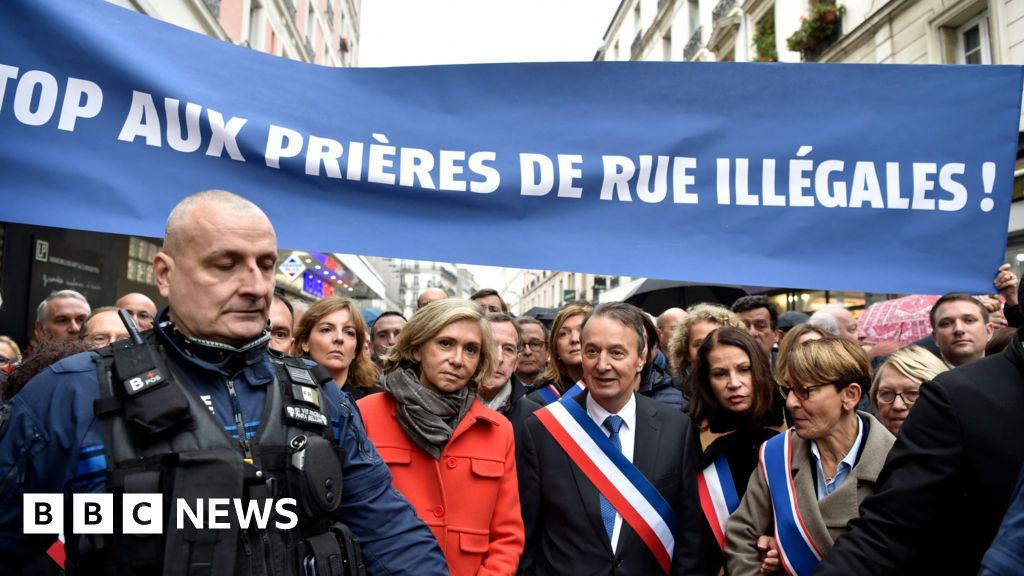
Europe’s leaders must also acknowledge that remigration, though controversial, will be an essential step in protecting their unique cultures for future generations. European officials should have no compunction about ridding their countries of migrants who are unable or unwilling to assimilate: emigrating to a foreign country is a pact between the migrant and the host country, one which involves certain concessions from new arrivals. Assimilation is by its very nature a coercive process: new arrivals must be willing to make sacrifices to successfully assimilate to their host countries. In Vienna, 45% of first graders do not speak enough German to follow lessons, an increase from 36% in 2023. Notably, 60% of such cases do not involve new arrivals, but rather students who were born in Vienna, reflecting an ongoing failure to assimilate existing populations of migrants. (6) Mass open air prayer meetings - now a common sight across Europe - are nothing less than calculated displays of religious dominance by adherents of Islam. They should serve as a warning that many migrants from Muslim majority countries have no intention of submitting to any other religion or social orders other than their own. Banning such gatherings at the local and state level would mark a small but important first step in signaling that such behaviors are unwelcome and will not be tolerated.
Failure to take action against migrants who possess a collective revulsion of Christian values, who view the West as degenerate and ripe for exploitation, and who have no intention of assimilating to their new host countries is to welcome future social chaos and violence. Such individuals should be viewed as cancerous cells in the body politic. They have nothing to offer their host countries except future strife and chaos. To coddle them in the name of political correctness is to embrace civilizational demise.
X as the Last Refuge of Free Speech Online
X is the last truly free speech social media platform left in the world. The EU’s full frontal assault on the platform is a clear indicator that Brussels views X as the last major obstacle standing in the way of its censorship driven, dystopian agenda. While other social media platforms operating in the EU have agreed to moderate their content to remain in compliance with the DSA, Musk has steadfastly refused to algorithmically regulate or censor posts on X. For this, all of its users should be thankful, but the fines being levied against X are not insignificant, even for an individual with Musk’s resources. The Trump administration should be commended for voicing their opposition against this latest fine, and for sanctioning former Commissioner Breton. However, there is no guarantee that future administrations will be as sympathetic to social media platforms like X. The United States must not allow the cancer of EU censorship to spread to its shores. Though California’s SB771 censorship bill was recently vetoed, those on the progressive left, acting in the name of the common good, are sure to continue their push for European style restrictions on free speech in America. Social media users can rest assured that recent developments are merely the opening salvos in what is sure to be a protracted battle over free speech here and on the Continent in the years to come. Vigilance and advocacy will be key to ensuring freedom of expression on social media platforms in the future.
1.https://dragonflyintelligence.com/news/sweden-gang-bombings-and-shootings-increasing
2. https://thecritic.co.uk/germany-is-acknowledging-the-unspeakable/
3. https://www.ibtimes.com/india-has-rape-crisis-pakistans-may-be-even-worse-1011268
Copyright M. Bartolucci